Table of contents
Queues at border checks are back, e-gates are under strain, and mobility has become a political flashpoint from Washington to Brussels. At the same time, a parallel trend is accelerating quietly: states are digitising identity, residence and travel credentials, while affluent, globally mobile professionals look for ways to reduce friction, diversify risk and keep options open. In that context, the idea of a “digital passport” has moved from tech pitch to serious policy debate, raising a blunt question: could it become a practical route to more borderless living, or will it simply add a new layer of control?
Digital passports: convenience, but not citizenship
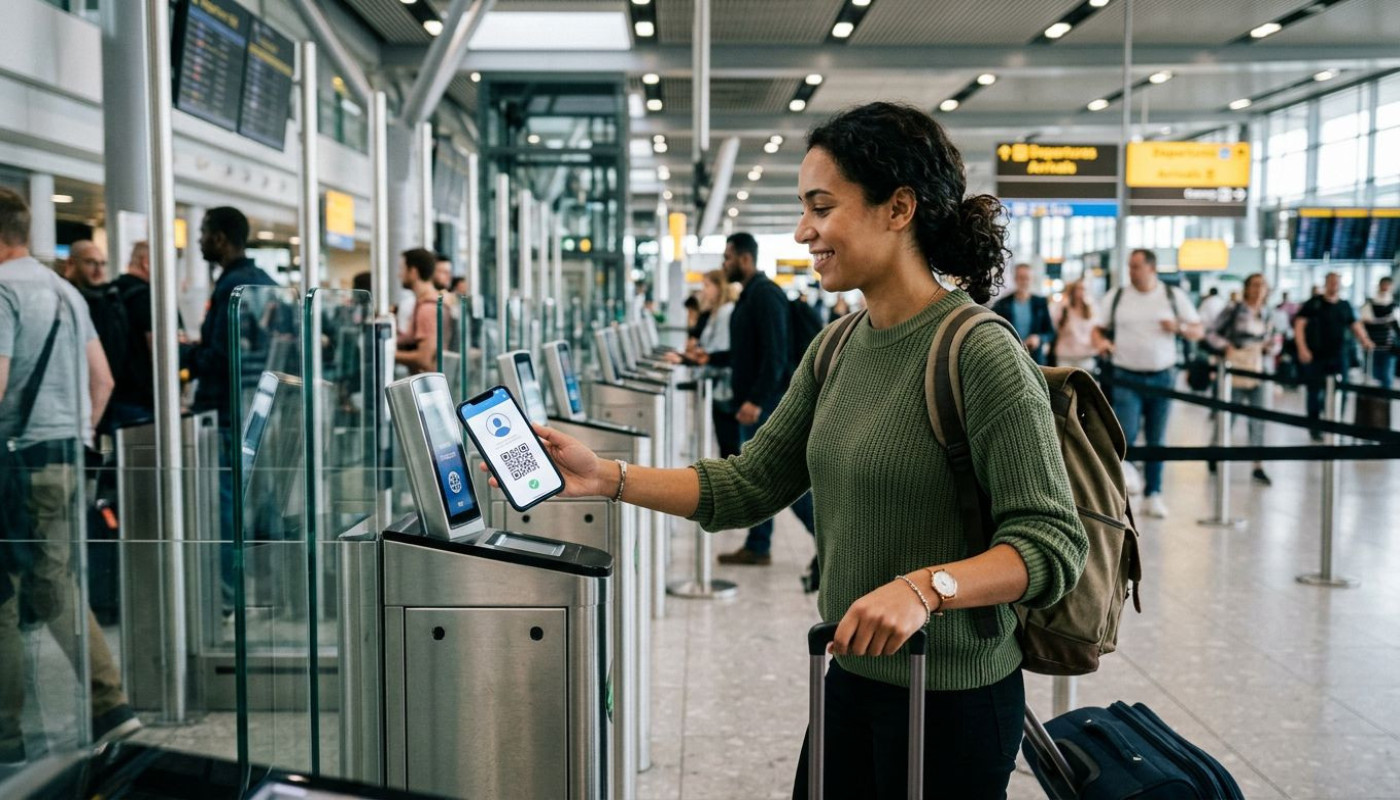
Paper booklets may feel timeless, yet the passport experience has been steadily moving online for years, and not only at the airport. Many governments now push digital identity frameworks that let citizens prove who they are to public services, banks and employers, and that same infrastructure naturally feeds into travel, because border agencies want cleaner data and faster decisions. The International Air Transport Association (IATA) has been among the loudest advocates, promoting its One ID vision and a “Digital Travel Credential” model designed to let travellers share verified information before they fly, reducing manual document checks. The rationale is operational: airports are built for flow, and biometric gates can process people faster than staffed booths, even if they occasionally fail and create bottlenecks.
Yet a critical distinction is often blurred in the hype, and it matters for anyone dreaming of “borderless living”. A digital passport is, in most realistic scenarios, not a new nationality, and not even a new right to enter a country; it is a different format for proving an existing status. The European Union’s Entry/Exit System (EES), expected to roll out in stages after repeated delays, is a case in point: it focuses on registering third-country travellers’ entries and exits, using biometrics to strengthen enforcement of the Schengen 90/180-day rule. That is digitisation, but it tightens compliance rather than relaxing it. Even when digital identity makes a crossing faster, it does not change the underlying visa policy, the security screening, or the discretion border officers retain.
What digitalisation does change is the balance of friction. The burden shifts from a moment at the counter to a data-driven process upstream, where travellers are pre-verified, scored, approved or refused before they arrive. Airlines already shoulder part of this responsibility through “carrier liability” rules, which can penalise them for transporting passengers without the right documents. Add more pre-travel checks, and the logic of travel starts to resemble financial onboarding: fewer surprises at the border, but more decisions made out of sight. For travellers, that can feel borderless when it works, and more restrictive when it does not, especially if algorithms flag inconsistencies or if data-sharing errors become harder to challenge.
When mobility meets geopolitics and compliance
Borderless living, in practice, is not a slogan; it is a negotiation with geopolitics, and that negotiation has become sharper. Since Russia’s invasion of Ukraine, Europe has tightened some categories of travel, while also investing heavily in security coordination, and the United States has continued to expand the scope of screening and watchlist processes. Visa policy remains one of the clearest tools of diplomacy, and sanctions regimes increasingly touch ordinary movement, from air routes to banking access needed for travel. The world is not closing uniformly, but mobility is undeniably more conditional, and the conditions vary rapidly.
Data shows the unevenness. Henley & Partners’ Henley Passport Index, which ranks passports by the number of destinations their holders can access without a prior visa, has repeatedly highlighted a widening gap between the most and least “powerful” travel documents. Singapore and several European countries have sat near the top in recent editions, often exceeding 190 destinations with visa-free or visa-on-arrival access, while many passports in Africa and parts of Asia remain far lower. These rankings are not just bragging rights; they shape real decisions about where businesses place teams, how families plan education, and how entrepreneurs manage multi-country operations.
Compliance has also moved centre stage. Anti-money laundering rules, “know your customer” requirements and tax reporting standards now shape the mobility ecosystem, because opening accounts, renting property, or incorporating a company abroad can be as important as crossing a border. That is why the idea of having options, whether through residence rights, long-stay visas, or additional citizenship, continues to attract interest among globally mobile people. The appeal is not only holiday travel; it is the ability to respond when a home country’s politics shift, when a conflict disrupts routes, or when a health crisis prompts sudden entry rules, as happened during the Covid-19 pandemic.
Digital passports sit in the middle of this. They promise speed and certainty, but they also embed mobility in systems that are easier to monitor and to restrict. A border officer’s discretion is visible; a pre-travel risk score is not. And the more states exchange passenger data, biometrics and identity signals, the more “borderless” can mean “border everywhere”, with checks happening at booking, at check-in, and long before anyone sees a terminal. The trade-off becomes political as well as practical: convenience for many, deeper scrutiny for some, and persistent inequality in who gets waved through.
Citizenship strategies still drive real access
For people trying to widen their lawful travel options, the most consequential lever remains the same: the rights attached to citizenship and residence, not the format of the credential. A digital passport can be a sleek wrapper, but the substance is in the treaties, the visa waivers, and the domestic laws that define who may enter, work, study and settle. That is why a parallel industry has grown around “mobility planning”, combining long-stay visas, second residences, and in some cases additional citizenship acquired through ancestry, naturalisation, or investment pathways.
In Europe, for example, the Schengen Area’s rules are strict for most short-term visitors, and overstays can trigger bans and future refusals. At the same time, national systems remain diverse: some countries issue “digital nomad” or remote-work visas, others offer entrepreneur routes, and many operate residence permits tied to employment, study, or family reunification. These programmes are not interchangeable, and they can change quickly under domestic pressure. The European Union has also been revisiting the governance of “golden passport” schemes, and several member states have tightened or ended investor citizenship pathways in response to security and integrity concerns. For a would-be global citizen, the headline is clear: access exists, but it is political, conditional and increasingly scrutinised.
Where does a small Pacific country like Vanuatu fit into this picture? Vanuatu has been known for offering citizenship through an investment programme, and it has previously attracted applicants interested in travel convenience and diversification. But visa-free access is not static, and Europe’s stance matters. The European Union has, in recent years, taken steps affecting Vanuatu’s visa-waiver status, citing concerns around investor citizenship governance, and that has changed the practical value proposition for travellers focused on Schengen access. Anyone researching the topic inevitably lands on the same question, phrased bluntly in search bars and forums: vanuatu passport visa-free europe. The honest answer is that travellers must verify the latest status with official sources, because eligibility and waivers can shift through diplomatic and regulatory decisions.
That dynamic is precisely why “digital passport” talk can be misleading. A smartphone credential does not renegotiate visa waivers, and a biometric seal does not override policy disputes. The real determinants of borderless living are still legal: which passport you hold, which residence rights you can prove, and whether your status meets a country’s entry conditions at that moment. Digital tools may streamline the proof, but they do not create the right itself.
Privacy, exclusion and the new gatekeepers
Speed is seductive, but who gets left behind? That is the question civil-liberties groups and privacy regulators keep raising as borders digitise. Biometric systems can reduce impersonation and document fraud, yet they also create high-value data sets, and data breaches are no longer theoretical. When identity becomes a database, security failures become systemic risks, and the harms can be difficult to reverse, because you cannot change your face the way you change a password. The European Union’s GDPR regime sets high standards for data protection, but enforcement is uneven across jurisdictions, and international data-sharing complicates accountability.
There is also a fairness problem. Biometric matching can be less accurate for some demographics, depending on the training data and the technology used, and errors can cascade: a mismatch can lead to secondary screening, missed flights, or repeated flagging. Meanwhile, digital-first systems can penalise travellers without stable access to technology, documentation, or reliable connectivity. Even in wealthy countries, not everyone has a current smartphone, and not everyone is comfortable storing sensitive credentials on a device that can be lost, stolen or searched. The “borderless” experience may therefore be most accessible to frequent travellers with resources, while others face more friction than before.
Finally, digital borders change who the gatekeepers are. Airlines, travel platforms and identity-verification vendors gain influence, because they sit at the front of the funnel. If an airline’s system cannot verify your documentation, you may never reach the border to argue your case. This is already visible with electronic travel authorisations, such as the United States’ ESTA for Visa Waiver Program travellers, and the EU’s upcoming ETIAS for visa-exempt visitors. These systems are presented as light-touch, but they formalise permission in advance, and they normalise refusals delivered by automated workflows. In other words, the future may involve fewer dramatic confrontations at passport control, and more quiet denials before departure.
What travellers can do, realistically
The practical path to smoother mobility is less futuristic than it sounds: keep documentation clean, plan legally, and treat policy as something that can change fast. That means ensuring passports have sufficient validity, tracking entry and exit dates in zones like Schengen, and checking whether an electronic authorisation is required even when a visa is not. It also means recognising that “digital passport” developments are primarily about efficiency and enforcement, not about expanding rights, and that the biggest gains still come from lawful status choices such as residence permits, work visas, and, where applicable, additional citizenship obtained through transparent, compliant routes.
For those considering mobility planning as a serious project, budgeting matters as much as aspiration. Application fees, legal advice, translations, apostilles, travel for appointments, and ongoing renewal costs can quickly exceed expectations, and some residence routes require minimum income, health insurance, or proof of accommodation. Travellers should also factor in timing: background checks and document procurement can take months, and last-minute moves are often the most expensive. When looking at any programme advertised as a shortcut, the safest approach is to cross-check claims with official government websites, and, if needed, consult qualified immigration counsel, because reputational risk and refusals can follow you across borders.
Planning your next move, with eyes open
Digital passports will make some journeys faster, and they may reduce the daily irritation of travel, but they are not a magic key to living without borders. For most people, the real work is still legal and logistical: pick a destination, map the visa or residence route, set a realistic budget, and book appointments early. Where available, explore public support options for mobility linked to study or work, and keep checking official updates as rules shift.
Similar

Digital Detox: When Dereferencing Becomes A Brand’s Survival Tool

Exploring The Impact Of Technology On Modern Literature

The role of 5G connectivity in powering the future of IoT devices

What are the most common uses for ChatGPT?
